10th Edition

Welcome to
10th International Conference on Computational Intelligence and Data Science (ICCIDS 2027)

Advancing Computational Intelligence and Data Science for Sustainable, Secure, and Frontier Technologies

6th - 8th January 2027

About the Conference

The conference provides an opportunity for the researchers, engineers, developers, and practitioners from academia and industry to discuss and address the experimental, theoretical work and methods in solving problems related to data science.

Where

Department of Computer Science and Engineering, Sri Sivasubramaniya Nadar College of Engineering

When

6th - 8th January 2027 (Wednesday - Friday)

The 10th edition of the Annual IEEE International Conference on Computational Intelligence and Data Science is a flagship conference organized by Sri Sivasubramaniya Nadar College of Engineering, Kalavakkam, Chennai. The 2027 edition is technically sponsored by the IEEE Madras Section.

ICCIDS 2027

Conference Chairs

Padma Bhushan Dr Shiv Nadar

Chief Patron

Padma Bhushan Dr Shiv Nadar

Founder, SSN Institutions Chairman, HCL Technologies

Dr. P. Ramasamy

Patron

Dr. P. Ramasamy

Dean of Research, SSNCE
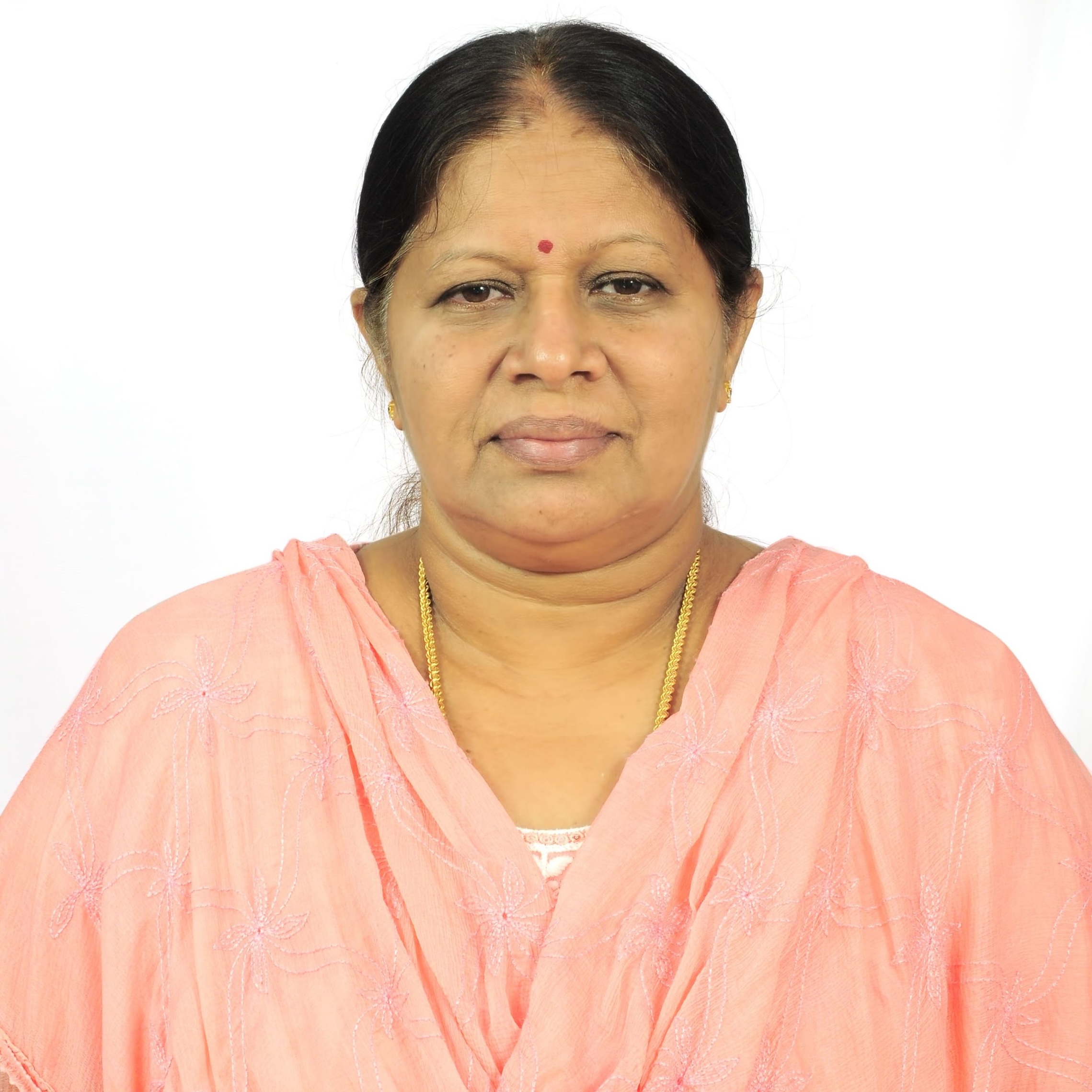
Dr. S. Radha

General Chair

Dr. S. Radha

Principal, SSN CE

Dr. T. T. Mirnalinee

Conference Chair

Dr. T. T. Mirnalinee

Professor & Head, CSE, SSN CE

ICCIDS 2027

Organizing Committee

ICCIDS 2027

Technical Program Committee

  • Dr. Abed Eyad, University of Maryland, USA
  • Dr. Andre Tits, University of Maryland, USA
  • Dr. Steven Low, California Institute of Technology, USA
  • Mr. Nachiappan Chokalingam, Meta (Facebook), USA
  • Mr. Aswath Kirubakaran, Meta (Facebook), USA
  • Mrs. Mythili Annamalai Sekar, Amazon, USA
  • Mr. Francis Tyson Thomas, Oishii, USA
  • Mr. Vinoth Punniyamoorthy, JPMorgan Chase & Co, USA
  • Dr. Sanjay Kumar, Oxford Brookes University, Oxford, UK
  • Dr. Mithun Kumar, Google London, UK
  • Dr. Ali Safaa Sadiq Al Shakarchi, Nottingham Trent University and Cyber Security Research Group, UK
  • Dr. Paul RP Hoole, Wessex Institute of Technology, Southhampton, UK
  • Dr. Seifedine Kadry, Noroff University, Norway
  • Dr. Chithirai Pon Selvan, Curtin University, Dubai
  • Dr. Dhanada Mishra, Raspect Intelligence Inspection Ltd. HKUS, Hong Kong
  • Dr. Aohan Li, The University of Electro-Communications, Chofu, Japan
  • Dr. Lu Wang, Harbin Engineering University, Harbin, China
  • Dr. Syed Alwee Aljunid Bin Syed Junid, UniMAP, Malaysia
  • Dr. Fereidoun H. Pahani, University of Kurdistan, Sanandaj, Iran
  • Dr. K. Suresh Manic, National University of Science and Technology, Oman
  • Dr. Sundaravadivazhagan, University of Technology and Applied Sciences, Oman
  • Dr. Kandasamy Pirapahaan, University of Jaffna, Sri Lanka
  • Dr. Pabitra Mitra, IIT Kharagpur, India
  • Dr. Om Jee Pandey, IIT Varanasi, India
  • Dr. Mayuresh S. Pardeshi, IIT Roopar, India
  • Dr. Arun K Sharma, IIT Roopar, India
  • Dr. E Sivasanakar, NIT Trichy, India
  • Dr. R. Mohan, NIT Trichy, India
  • Dr. Veena Thenkanidiyoor, NIT Goa, India
  • Dr. Robin Singh, NIT Hamirpur, India
  • Dr. Sujatha Das, Nagaland University, India
  • Dr. Umarani Jayaraman, IITDM, India
  • Dr. Preeth R, IIITDM, India
  • Dr. Priyanka Kokil, IITDM, India
  • Dr. Masilamani V, IITDM, India
  • Dr. Rahul Raman, IIITDM, India
  • Dr. Pal Uttam Mrinal, IIITDM, India
  • Dr. R. Baskaran, Anna University, India
  • Dr. R. Arockia Xavier Annie, Anna University, India
  • Dr. T. Sree Sharmila, Anna University, India
  • Dr. S. Renugadevi, Anna University, India
  • Dr. Chithra Selvaraj, Anna University, MIT Campus, India
  • Dr. S. Umamaheswari, Anna University, MIT Campus, India
  • Dr. Latha Parthiban, Pondicherry University, India
  • Dr. J. C. Kavitha, VIT, Chennai, India

ICCIDS 2027

Authors

Author Submission Guidelines

The 10th International Conference on Computational Intelligence and Data Science (ICCIDS 2027) invites original and unpublished research papers in computational intelligence, artificial intelligence, data science, and related emerging technologies.

Authors must carefully follow the guidelines below when preparing and submitting their manuscripts.

1. Manuscript Preparation and Formatting

All manuscripts must comply with the following requirements:

  1. Paper Format: Standard IEEE two-column conference format.
  2. Page Limit: Maximum 6 pages, including figures, tables, and references.
  3. Language: English.
  4. Submission Format: PDF only.
  5. Template: Official IEEE conference manuscript template.
  6. References: IEEE citation and reference style.
  7. Content: Manuscripts should clearly present the research problem, methodology, results, contributions, and conclusions.
  8. Originality: Submitted papers must contain original, unpublished research and must not be under consideration elsewhere.
  9. Formatting Compliance: Authors must not modify the margins, font sizes, line spacing, or column layout specified in the IEEE conference template.

Manuscripts that do not comply with the prescribed formatting and submission requirements may be rejected during initial screening.


2. IEEE Conference Paper Templates

All authors must use the standard IEEE conference paper template. The templates are available in Microsoft Word, LaTeX, and Overleaf formats.

Authors must ensure that the conference template, rather than a journal template, is used. All sample text, formatting instructions, and placeholders must be removed before manuscript submission.


3. Paper Submission Process

All papers must be submitted electronically through the official ICCIDS 2027 Microsoft Conference Management Toolkit (CMT) portal.

Authors must:

  1. Prepare the manuscript according to the IEEE conference paper template.
  2. Ensure that the manuscript does not exceed 6 pages.
  3. Convert the manuscript to PDF format.
  4. Upload the manuscript through the CMT submission portal.
  5. Verify the submitted manuscript and information before the deadline.

Extended Firm Paper Submission Deadline

November 18, 2026


4. Review and Selection Process

All submitted manuscripts will undergo peer review by the ICCIDS 2027 Technical Program Committee and designated reviewers.

Papers will be evaluated based on originality, technical quality, methodological soundness, experimental validation, relevance to the conference themes, and clarity of presentation.

The Technical Program Committee reserves the right to reject submissions that do not satisfy the prescribed technical, ethical, or formatting requirements.


5. Publication Ethics and Generative AI Disclosure

All submitted manuscripts must comply with applicable IEEE publication ethics policies.

Plagiarism, duplicate submission, fabricated or falsified research results, and other forms of research misconduct are strictly prohibited.

Authors must appropriately acknowledge previously published work and ensure the accuracy and authenticity of the presented results.

Generative AI Disclosure

Authors must disclose AI-generated content in accordance with IEEE publication policies, identifying the AI system used, the affected manuscript sections, and the nature of its contribution. Disclosure of AI-assisted grammar and language editing is recommended but not mandatory under IEEE's published guidance.

Authors remain fully responsible for the originality, accuracy, and integrity of their manuscripts.


6. Publication Policy and Disclaimer

Important Notice Regarding IEEE Xplore® Publication

IEEE approval for ICCIDS 2027 is currently pending.

Accepted and presented papers that satisfy all applicable conference and publication requirements will be considered for submission for possible inclusion in IEEE Xplore®, subject to the necessary IEEE approvals and publication arrangements.

Acceptance of a paper does not guarantee its publication in IEEE Xplore®.

Papers that fail to comply with IEEE conference formatting requirements, publication ethics, technical quality standards, registration requirements, or presentation policies may be excluded from the final proceedings.

The final decision regarding inclusion in IEEE Xplore® is subject to IEEE's applicable publication and quality requirements.

The ICCIDS 2027 Organizing Committee reserves the right to exclude manuscripts that fail to satisfy the prescribed conference and publication requirements.


7. Camera-Ready Submission and Presentation

Camera-Ready Submission Deadline

December 18, 2026

Authors of accepted papers must submit the final camera-ready manuscript by the deadline.

The final manuscript must incorporate necessary reviewer corrections, strictly follow the IEEE conference template, satisfy applicable PDF compliance requirements, and include accurate author information.

Presentation Requirements

  • At least one author of each accepted paper must register for and present the paper at the conference.
  • Remote presentation may be permitted for eligible authors based outside India, subject to prior approval from the Organizing Committee.
  • Failure to complete registration, submit a compliant camera-ready manuscript, or present the accepted paper may result in exclusion from the final proceedings.

Additional camera-ready instructions, including PDF validation and copyright requirements, will be communicated to accepted authors.


8. Contact

For queries related to manuscript preparation, submission, or publication requirements, please contact:

ICCIDS 2027 Organizing Committee

Department of Computer Science and Engineering
Sri Sivasubramaniya Nadar College of Engineering
Kalavakkam, Chennai, Tamil Nadu, India

ICCIDS 2027

Keynote Talks

Keynote Speaker

Prof. Jagath C. Rajapakse

Professor Jagath C. Rajapakse

Prof. Jagath C. Rajapakse

Professor of Data Science

College of Computing and Data Science
Nanyang Technological University (NTU), Singapore

IEEE Fellow · Fulbright Scholar

Keynote Presentation

Encoding and Decoding the Human Brain Connectome

Recent advances in AI have increased our understanding of the human connectome and of brain disorders from neuroimaging scans such as MRI, functional MRI, and DTI. Deep learning has been recently applied for encoding and decoding brain scans. Encoding focuses on predicting diagnostic labels and clinical measures from the scans whereas decoding enables us to discover regional biomarkers.

In this talk, I will go through our recent works on decoding and encoding the connectome by using deep learning methods:

  1. 01.Disentangling age and cognition from brain disease
  2. 02.Structure-function coupling of the brain
  3. 03.Modeling dynamic brain connectivity of the brain
  4. 04.Integrating omics and brain imaging data
  5. 05.Handling multi-site image scans

About the Speaker

Jagath Rajapakse is Professor of Data Science at the College of Computing and Data Science at Nanyang Technological University (NTU), Singapore. He has a BSc degree in Electronics and Telecommunication Engineering from the University of Moratuwa (UM), Sri Lanka, and MS and PhD degrees in Electrical and Computer Engineering from the University at Buffalo (UB), USA.

He was a Visiting Scientist at the Max-Planck Institute of Cognitive and Brain Sciences, Germany, and the National Institute of Mental Health, USA, before joining NTU. He was also a Visiting Professor at the Department of Biological Engineering at Massachusetts Institute of Technology (MIT).

Professor Rajapakse has published over 300 peer-reviewed research articles in high-impact journals and conferences. His current research interests are in explainable AI, generative AI, brain imaging, and drug discovery.

He focuses on developing computational techniques and tools for diagnosis and treatment of brain diseases using neuroimaging scans (MRI, fMRI, DTI, and PET) and omics data (genomics, proteomics, transcriptomics, and epigenomics). He also investigates how generative AI can be used to discover novel drugs, including small molecules, peptides, and antibodies, for targeted therapeutics.

He serves as Editor for the Engineering Applications in Artificial Intelligence journal (IF = 8.0) and previously served as Associate Editor for IEEE Transactions on Medical Imaging, IEEE Transactions on Neural Networks and Learning Systems, and IEEE Transactions on Computational Biology and Bioinformatics.

He was a Fulbright Scholar and was elevated to IEEE Fellow in 2012 in recognition of his contributions to brain image analysis.

Teaching

  • SC4001: Neural Networks and Deep Learning
  • CE7412: Computational and Systems Biology

Recent Publications

Selected research publications · 2022–2026

  1. A. Niwarthana and J. C. Rajapakse, “LABMA: Latent bottleneck attention-based architecture for integration of transcriptomics, proteomics, and MRI in neurodegeneration,” Computers in Biology and Medicine, Volume 210, July 2026. DOI: 10.1016/j.compbiomed.2026.111740
  2. J. Xia et al., “Learning brain structure-function interactions via modality-guided attention-based graph neural networks,” Information Fusion, 135, 104426, April 2026. DOI: 10.1016/j.inffus.2026.104426
  3. T. N. B. Sayuti et al., “Target-aware latent diffusion model for design of apoptosis-inducing anticancer peptides,” Computers in Biology and Medicine, December 2025. DOI: 10.1016/j.compbiomed.2025.111286
  4. D. Girish et al., “Encoding and decoding of brain dynamic connectivity for ADHD diagnosis,” IEEE Journal of Biomedical and Health Informatics. DOI: https://ieeexplore.ieee.org/abstract/document/11399873
  5. J. Xia et al., “Disentangling shared and unique brain functional changes associated with clinical severity and cognitive phenotypes in schizophrenia via deep learning,” Communications Biology, 8:1215, August 2025. DOI: https://www.nature.com/articles/s42003-025-08637-0
  6. P. Lyu et al., “TwinsTNet: Broad-view twins transformer network for bimodal salient object detection,” IEEE Transactions on Image Processing, Vol. 34, 2025. DOI: 10.1109/TIP.2025.3564821
  7. J. Xia et al., “Interpretable modality-specific and interactive graph convolutional neural networks on brain functional and structural connectome,” Medical Image Analysis, Vol. 102, 2025. DOI: 10.1016/j.media.2025.103509
  8. C. Wang et al., “Drug discovery and mechanism prediction with explainable graph neural networks,” Scientific Reports, 2025. DOI: https://www.nature.com/articles/s41598-024-83090-3
  9. C. Wang et al., “GLDM: Hit molecule generation with constrained graph latent diffusion model,” Briefings in Bioinformatics, 2024. DOI: 10.1093/bib/bbae142
  10. J. C. Rajapakse et al., “Two-stage approach to intracranial hemorrhage segmentation from head CT images,” IEEE Access, 2024. DOI: 10.1109/ACCESS.2024.3393231
  11. S. Goyal and J. C. Rajapakse, “Self-supervised learning for hotspot detection and isolation from thermal images,” Expert Systems with Applications, 2024. DOI: 10.1016/j.eswa.2023.121566
  12. Y. H. Chan et al., “Elucidating salient site-specific functional features and site-invariant biomarkers in schizophrenia via deep neural networks,” Scientific Reports, 2023. DOI: https://www.nature.com/articles/s41598-023-48548-w
  13. W. K. Soh et al., “HUT: Hybrid U-Net transformer for brain lesion and tumor segmentation,” Heliyon, 2023. DOI: 10.1016/j.heliyon.2023.e22412
  14. Y. Zhang et al., “Multi-modal graph neural network for early diagnosis of Alzheimer’s disease from sMRI and PET scans,” Computers in Biology and Medicine, 2023. DOI: 10.1016/j.compbiomed.2023.107328
  15. S. Xiao et al., “Graph neural networks with multiple prior knowledge for multiomics data analysis,” IEEE Journal of Biomedical and Health Informatics, 2023. DOI: 10.1109/JBHI.2023.3284794
  16. C. Wang et al., “Network-based integration of multi-omics data for clinical outcome prediction of neuroblastoma,” Scientific Reports, 2022. DOI: https://www.nature.com/articles/s41598-022-19019-5
  17. C. Wang et al., “Deep learning and multi-omics approach to predict drug responses in cancer,” BMC Bioinformatics, 2022. DOI: 10.1186/s12859-022-04964-9
  18. Y. H. Chan et al., “Combining neuroimaging and omics datasets for disease classification using graph neural networks,” Frontiers in Neuroscience, 2022. DOI: 10.3389/fnins.2022.866666
  19. S. Gupta, M. Lim and J. C. Rajapakse, “Decoding task-specific and task-general architectures of the brain,” Human Brain Mapping, 2022. DOI: 10.1002/hbm.25817

Funded Projects

Research grants and funded collaborations

  1. De novo anti-cancer therapeutic agent design in equivariant 3D space with conditional diffusion models — AcRF Tier-2, MOE Singapore (2025–2028), $816,192.
  2. Elucidating brain structure-function interaction implication in brain diseases via explainable AI — AcRF Tier-1, MOE Singapore (2024–2026), $185,000.
  3. Deep generative approach for de novo cancer drug discovery with desired mechanism of action — AcRF Tier-1, MOE Singapore (2023–2024), $100,000.
  4. Software application for thermal image analytics — Wonder Engineering Technologies, Singapore (2022–2024), $130,000.
  5. Decoding the connectome by deep encoding on graphs — AcRF Tier-2, MOE Singapore (2022–2025), $730,249.
  6. Developing unsupervised machine learning techniques for discovering novel ocular and brain imaging biomarkers of Alzheimer’s disease — MSD International (2021–2023), $169,000.
  7. Machine learning for demand forecasting — Becton Dickinson Holding Pte. Ltd. (2021–2023), $263,000.
  8. Multilayer networks for identification of biomarkers and prediction of clinical variables from multi-omics data — AcRF Tier-1, MOE Singapore (2020–2021), $99,998.75.
  9. Detection of customer emotions and behaviour from speech — Singtel-NTU joint research grant (2018–2020), $390,593.
  10. Study of Alzheimer’s disease heterogeneity and progression using latent grey-matter atrophy and white-matter impairment factors — AcRF Tier-1 (2018–2020), $99,912.48.
  11. Predicting missing and spurious links and labels of protein-interaction networks — AcRF Tier-2 (2017–2020), $579,536.

Keynote Speaker · Nanyang Technological University, Singapore

ICCIDS 2027

Pre-Conference Workshops

Coming Soon

Pre-conference workshop details will be announced shortly.

TBA

ICCIDS 2027

Conference Schedules

Coming Soon

Conference schedules will be published shortly.

TBA

ICCIDS 2027

Call for Papers

The theme of this conference is Advancing Computational Intelligence and Data Science for Sustainable, Secure, and Frontier Technologies

Scan the QR code to access the ICCIDS 2027 CMT portal (Submission must be in IEEE format)

QR code for ICCIDS 2027 CMTSubmit Paper

CMT Acknowledgement

The Microsoft CMT service was used for managing the peer-reviewing process for this conference. This service was provided for free by Microsoft and they bore all expenses, including costs for Azure cloud services as well as for software development and support.

Topics of Interest

  • •Quantum algorithms for AI and machine learning
  • •Quantum neural networks and deep learning
  • •Quantum cryptography and secure computing
  • •Quantum-inspired optimization techniques
  • •Quantum simulation and modeling
  • •Hybrid quantum-classical computing frameworks
  • •Error correction and fault tolerance in quantum systems
  • •High-performance computing architectures
  • •Neuromorphic and brain-inspired architectures
  • •Embedded & real-time systems
  • •Cloud, edge, and fog computing architectures
  • •Energy-efficient computing systems
  • •Hardware acceleration for AI (GPU, TPU, FPGA)
  • •Scalable architectures for big data and AI workloads
  • •Object detection, tracking, and recognition
  • •3D vision, stereoscopic imaging, and depth estimation
  • •Scene understanding and semantic segmentation
  • •Action and gesture recognition
  • •Vision-based biometrics and identity verification
  • •Image and video quality assessment and enhancement
  • •Vision for autonomous vehicles and robotics
  • •Virtual and augmented reality applications in education, healthcare, and industry
  • •Mixed reality interfaces and interaction design
  • •Human-computer interaction in immersive environments
  • •3D content creation, rendering, and visualization
  • •Immersive simulations and training systems
  • •Stereoscopic 3D and 360° video processing
  • •Perceptual quality and user experience in immersive systems
  • •Deep learning architectures and optimization
  • •Reinforcement learning and decision-making systems
  • •Transfer learning and domain adaptation
  • •Generative models and diffusion-based learning
  • •Explainable AI (XAI) and interpretable models
  • •Federated and privacy-preserving machine learning
  • •Bio-inspired and swarm intelligence algorithms
  • •Metaheuristic and evolutionary optimization algorithms
  • •Multi-objective and constraint-based optimization
  • •Combinatorial optimization and scheduling problems
  • •Stochastic and robust optimization methods
  • •Game theory and decision sciences
  • •Optimization in logistics, supply chain, and transportation
  • •AI-driven resource allocation and planning
  • •AI ethics, bias, and fairness
  • •Accountability, transparency, and trust in AI
  • •AI governance and policy frameworks
  • •Privacy, data protection, and compliance
  • •Legal aspects of autonomous systems
  • •Responsible AI deployment in industry
  • •Societal impact and sustainable AI adoption
  • •Smart city infrastructure and IoT for urban management
  • •AI in energy efficiency and renewable energy systems
  • •Sustainable agriculture and rural development technologies
  • •Intelligent transportation and traffic management
  • •Environmental monitoring and disaster management
  • •Water resource management using AI
  • •AI for education and healthcare in rural communities

ICCIDS 2027

Important Dates

PhaseDateStatus
Paper Submission Opening22nd July 2026Upcoming
Paper Submission Deadline15th October 2026Extended to November 18thUpcoming
Notification of Paper AcceptanceNovember 30th 2026Upcoming
Camera-Ready Copy & RegistrationDecember 18th 2026Upcoming
Main Conference Dates6th-8th January 2027Upcoming

ICCIDS 2027

Past Conferences

ICCIDS 2027

Registration Fees

Registration Fee for Conference Presentation

TBA

ICCIDS 2027

Event Venue

SSN College

SSN College of Engineering, Old Mahabalipuram Road, Kalavakkam, Tamil Nadu 603110, India.

✈️

Airport: 36 km from Anna International airport

🚂

Railway station: 44 km from Chennai Central railway station

🚌

Bus Depot: 6 Km from Kelambakkam Bus Depot

Visit the College's Website for more information.

How to Reach Venue?

  • From Koyambedu: Bus to Kelambakkam (570, 570X) and then a local auto/bus to SSN.
  • From Kilambakkam: Bus to Kelambakkam (555s, 515) and then a local auto/bus to SSN.
  • From Egmore: Suburban train to Guindy or Tambaram, then a bus 570 (from Guindy) or 515, 551 (from Tambaram) to Kelambakkam, followed by a local auto/bus.
  • From Chennai Central: Suburban train/Metro to Guindy and then a bus (570) to Kelambakkam, followed by a local bus/auto to SSN.

Cab Options

Ride-hailing services like Namma Yatri and FastTrack are available throughout the city.

ICCIDS 2027

Accommodation

We have arranged comfortable stay options for our conference participants.

On Campus Stay

Boys Hostel

Boys Hostel

Comfortable on-campus accommodation for male participants with basic amenities and easy access to the conference venue.

  • • Price: Yet to be updated
  • • Shared / Single options
Girls Hostel

Girls Hostel

Safe and secure on-campus accommodation for female participants, located within walking distance of the venue.

  • • Price: Yet to be updated
  • • Shared / Single options
Guest House

Guest House

Well-furnished guest house accommodation for invited speakers and delegates seeking added comfort.

  • • Price: Yet to be updated
  • • Limited availability

Off Campus Stay

Hotel Lebanon Inn

Hotel Lebanon Inn

Rating: 3.1/5

Distance from campus: 6.8 Km

Book Now
Regenta Central

Regenta Central

Rating: 4/5

Distance from campus: 10.3 Km

Book Now
D Square

D Square

Rating: 3.8/5

Distance from campus: 9.4 Km

Book Now

ICCIDS 2027

Contact Us

For any queries, contact the below email:

iccids@ssn.edu.in